Family-Friendly Nature Walks Near Springs: What to Check Before You Go
A spring makes a satisfying destination for a walk with children. It is a definite place rather than a vague direction, it usually sits at the end of a short path, and there is something genuinely interesting waiting there: water coming straight out of the ground. Children who complain about walking to a viewpoint will happily walk to a spring.
But a spring is not a meadow. The ground around it is wet, the stones are slick, the banks can be undercut, and the water is colder and faster than it looks from three metres away. None of that should put you off. It just means the planning is a little different from choosing a picnic loop, and most of the checks take about ten minutes at home.
Choose a destination your child can reach, not one you can
Distances on trail signs are measured for adults walking steadily. A five-year-old covers ground in bursts, stops to inspect every beetle, and slows down considerably on the return leg. A workable rule is to halve the distance you would walk alone and double the time you would allow for it.
Terrain matters more than kilometres. One kilometre of tree roots, wet clay and stone steps is harder on small legs than three kilometres of flat gravel track. If the trail notes mention "steep section", "ford" or "exposed traverse", believe them and pick something else for this year.
Out-and-back routes beat loops when you are walking with children. You know exactly how far you have to walk to get home, and you can turn around at any point without spoiling the walk. Set a turnaround time rather than a turnaround place — "we start back at half past two, wherever we are" — and stick to it. A spring reached at lunchtime with energy left for the walk out is worth far more than one reached in a state of exhaustion.
Read the terrain before you commit
Look at photographs of the actual path, not just the spring. Local walking websites, park authority pages and route descriptions often include them, and they will tell you more than any star rating.
Surfaces that work well
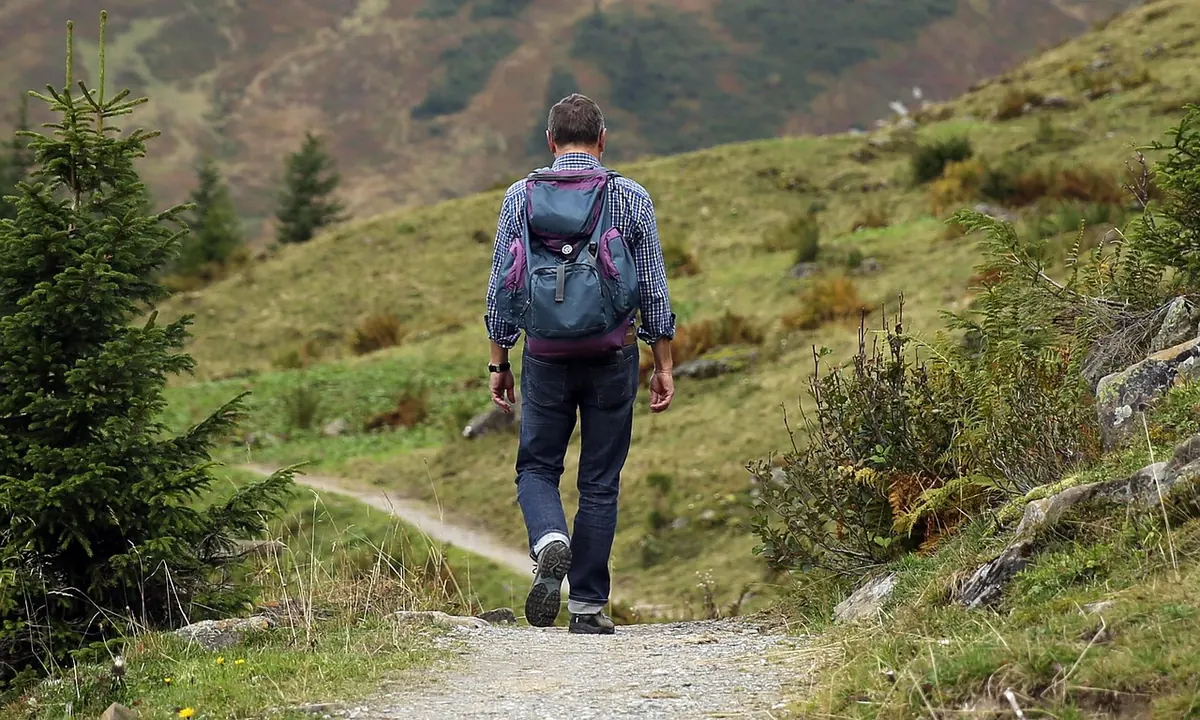
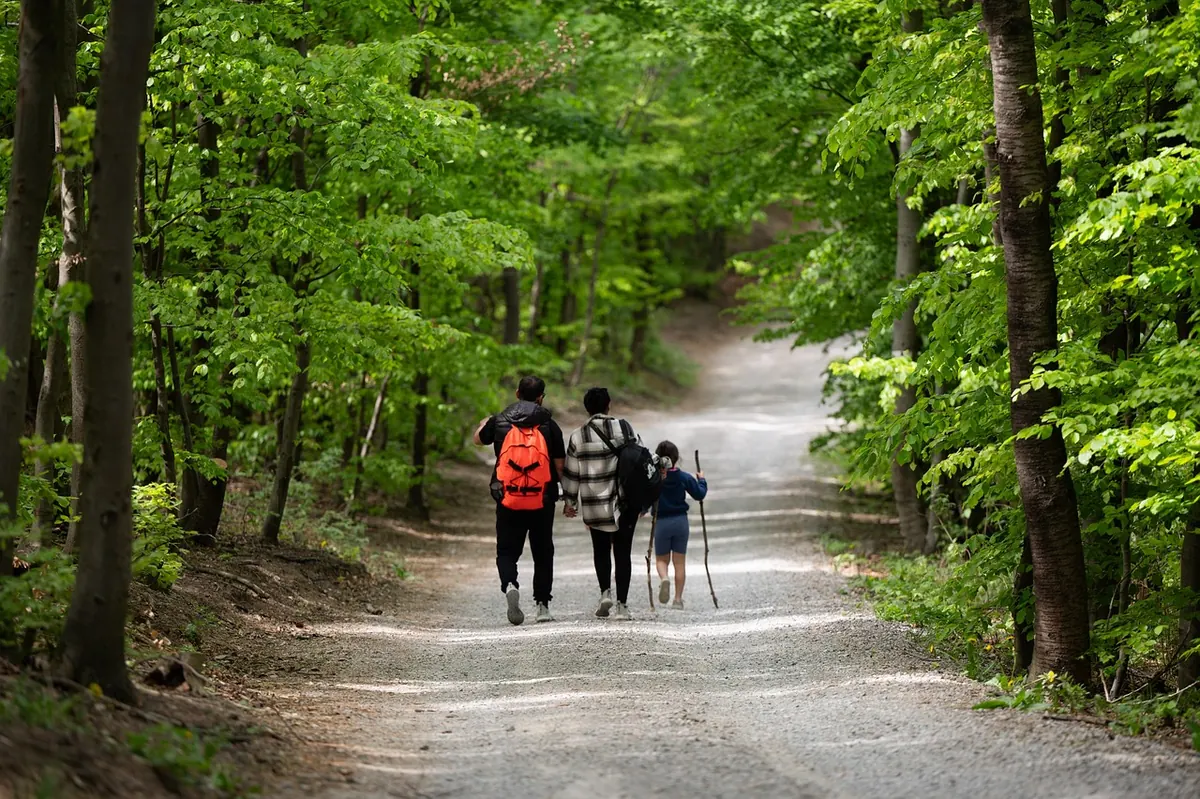
Packed gravel, mown grass, boardwalk, forest track with a firm base and drainage. These let a child walk and talk at the same time, which is when the good parts of a walk happen.
Surfaces that ask for more
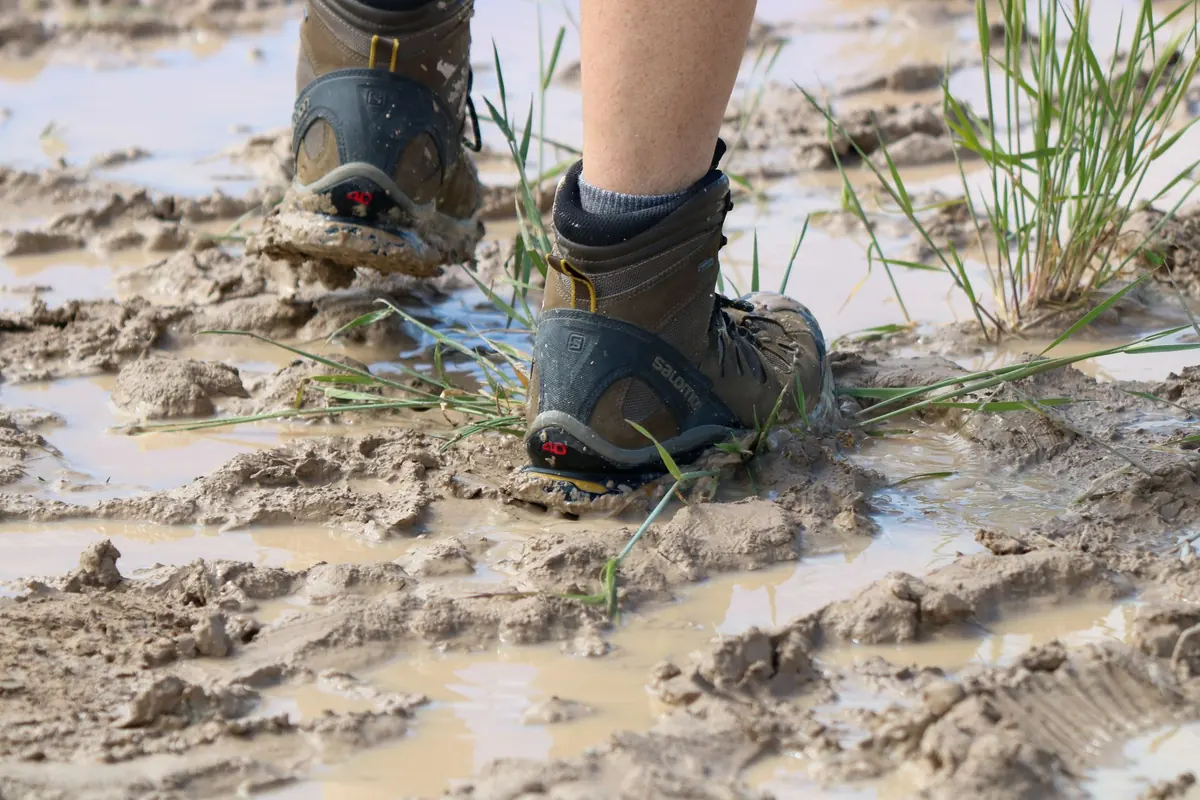
Loose scree, wet clay, polished river stones, exposed roots, and anything that crosses a slope. Mud is fine in small doses and a nuisance in large ones. Slippery stone near water deserves particular respect, because a slip there ends in the stream rather than on the grass.
Footwear does most of the safety work here. Closed shoes with a grippy sole, for adults and children both. Sandals and smooth-soled trainers are a poor choice on wet ground, even for a short walk.
Where the path narrows
Have an arrangement before you need it. On any narrow stretch with a drop or water on one side, an adult walks on the outside and children on the inside, single file, holding hands if the edge is close. Say it out loud at the trailhead so it is a routine rather than a sudden instruction.
The spring itself: the part that needs the most attention
Children are drawn to water and that is exactly as it should be. Your job is to make the looking safe.
Spring water is often only a few degrees above freezing, year-round. A child who steps in expecting a warm puddle gets a shock, loses footing and goes down fast. Even shallow water barely above ankle height can knock a small person over if it is moving.
Banks around springs are frequently undercut. Grass grows out over empty space where the water has worked the soil away underneath, so what looks like solid ground is a shelf. Test edges yourself before letting anyone sit on them, and keep everyone a body-length back from the lip unless you have checked it.
- Agree a stop line before you arrive — a specific landmark, not an abstract rule. "We stop at the flat grey rock" works; "don't go too close" does not.
- Stay within arm's reach of any child under about six whenever water is in sight.
- Keep away from troughs, pipes, culverts, old channels and basin edges. They are the most interesting things there and the most slippery.
- Do not assume spring water is safe to drink because it looks clear and comes out of the ground. Clarity says nothing about contamination from grazing animals or runoff upstream. Carry your own water; if you want to drink from a source, check with the local park authority first.
Sensible health note: if anyone does drink untreated water and becomes unwell afterwards, or if a child takes a fall near water and you are unsure about injury, seek proper medical advice rather than guessing.
Check the season, the weather and the water level
Spring behaviour changes through the year. In late spring, snowmelt can turn a modest stream into a loud, fast one. In high summer, some springs shrink to a trickle or stop altogether, and the ground around them turns to mud. Neither is a reason to cancel, but both change what you should expect.
Look at rainfall in the two or three days before you go. Clay trails hold water and stay slippery long after the rain stops. In mountain areas, afternoon thunderstorms are common in summer, so an early start is worth the alarm clock. Plan to be back at the car before the sky starts building.
Wet ground near springs also means insects. Long trousers tucked into socks, a repellent you are happy using on your children, and a check for ticks at bath time are all part of the routine in early summer.
Pack for wet feet and short attention spans
- Water for everyone, in bottles you can carry, plus a small snack for the turnaround point.
- Spare socks and a full change of clothes for the youngest — someone will end up wet.
- A small towel and a bag for wet things.
- Grippy closed shoes, and a light waterproof layer even on a sunny forecast.
- Sun hats and sun cream for open sections of trail.
- A basic first-aid kit: plasters, antiseptic wipes, a couple of dressings.
- A phone with the route saved offline, and a paper note of where you are going.
Facilities, access and the unglamorous checks
Confirm that the road to the trailhead is open and drivable — farm tracks and forest roads close for maintenance, and winter damage lingers. Check whether there are toilets, and where the nearest village is if there are not. Photograph the map board at the trailhead, because mobile signal comes and goes and the board is often the clearest map you will see all day.
Where the trail crosses private or protected land, read the rules at the entrance: dogs on leads, no swimming, no fires, stay on marked paths. And tell someone at home where you are going and when you expect to be back.
The five-minute check before you leave the car park
Stand at the trailhead and run through it once. Water for everyone. Shoes done up. Everyone knows the stop line and the turnaround time. One adult on the outside of narrow sections. The route is on a phone that is charged, and someone knows where you are.
Then walk. Aim to arrive at the spring with more energy than you need for the way back, let the children look properly, and leave before anyone is tired. Short walks that end well are the ones children ask to repeat — and a spring reached comfortably at nine years old becomes a longer trail at eleven.
Photo: Eliasderfotograf / Pixabay