


Loop vs. Out-and-Back Spring Trails: Which Route Suits Your Day Hike?
A spring trail can look simple on paper and feel completely different underfoot. Snow is retreating uphill, creeks are running high, and the first warm weekend brings out more people than the path was designed for. In that setting, the shape of your route matters as much as its length. A 10 km loop and a 10 km out-and-back are not the same hike with a different line on the map. One keeps feeding you new ground; the other asks you to earn a second look at everything you passed. Neither is better. The useful question is which shape suits the day you actually have.
Two Shapes, One Decision
A loop returns to the trailhead without retracing its steps. An out-and-back follows a single line to a destination and comes home the same way. The difference sounds small and isn't. Loops feel like a journey with a beginning, middle and end. Out-and-backs feel like a purpose: reach the saddle, the waterfall, the wildflower slope, then turn around. Spring sharpens the contrast, because conditions on the same mountain can differ wildly between a sun-facing meadow and a north-facing gully still holding winter.
Time, Distance and the Shape of Your Day
Map distance is a poor predictor of how long a route takes, and route shape is one reason why. A loop carries you through more junctions, more decision points and more chances to pause and check where you are. That is not wasted time, but it is time. An out-and-back lets you turn around whenever you like, which makes it easier to fit into a short day, a late start or a forecast that might not hold.
The return leg is where out-and-backs quietly cost you. Walking back over ground you already covered can feel slower, especially downhill on wet roots and loose gravel. Budget for it honestly. A useful habit is to set a turnaround time rather than a turnaround point, particularly in spring when a warm afternoon can soften snow and turn a firm path into a slick one. Write it on your hand or set an alarm. Then honour it.
Logistics matter too. A loop needs one car at one trailhead. Point-to-point routes need a shuttle or a second vehicle, and in spring many access roads stay closed longer than the trails themselves, which can quietly add kilometres at each end.
Scenery: Variety Against Depth
Loops are generous. They hand you a meadow, then a stretch of beech forest, then a rocky shoulder with a view, then a different valley on the way home. For a spring hike this is a real advantage: you get to sample several microclimates in a single morning and linger where the conditions are best. If the north side is still patchy with old snow, you will know it within an hour and can adjust.
Out-and-backs trade variety for depth. You notice more on the second pass, because the pressure to make progress is gone. You also get to push further toward one specific thing: a waterfall at peak snowmelt, a slope that flowers a week or two earlier than the valley floor, a ridge where the view opens only at the top. When the goal is a place rather than a circuit, the out-and-back wins almost every time.
Navigation: Confidence and Commitment
An out-and-back is the more forgiving format. Getting back is mostly a matter of reversing your steps, and if the weather turns or someone in the group tires, you can shorten the day without rearranging anything.
Loops demand more from you. Count the junctions on your map before you leave and know which ones matter. A wrong turn on a loop can mean an extra valley and two extra hours, because there is no easy retrace. Two spring-specific traps deserve attention. First, trails braid in mud season, and following other people's footprints can lead you onto a social path that fades out. Second, snow can bury a junction entirely; if the map shows a turn near the snowline, keep an eye on your distance and elevation rather than waiting for a sign.
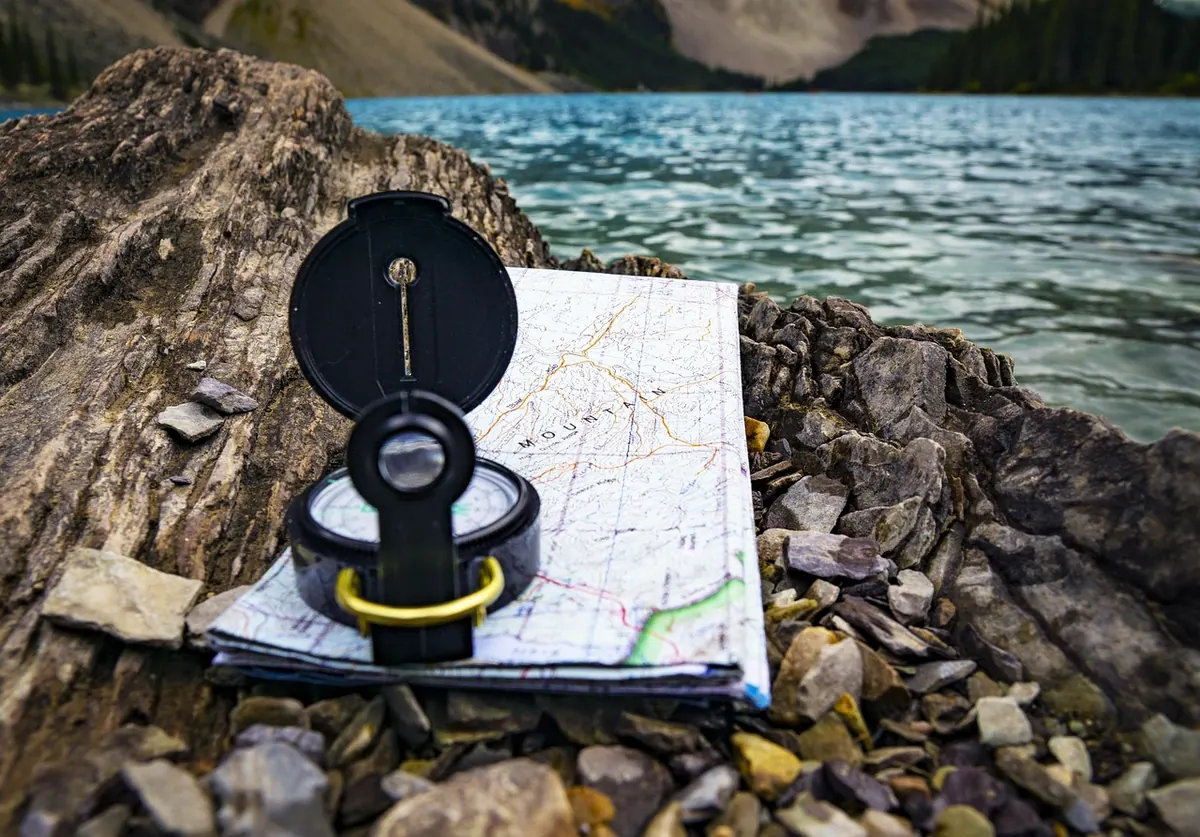
Carry a paper map or an offline map on your phone, and take a photo of the trailhead board. It costs ten seconds and settles most arguments.
How Spring Conditions Change the Math
Water is the deciding factor more often than people expect. A creek that is ankle-deep at nine in the morning can be knee-deep by late afternoon on a warm day, when meltwater from higher up finally arrives. On an out-and-back you cross at the same place twice, and you can judge the flow before committing, turning around if it looks wrong. On a loop, a crossing you dislike in the morning may be the only way home in the afternoon.
Add lingering snow on shaded sections, blowdowns from winter storms, and routes that officially close during mud season to protect fragile ground. All of this favours flexibility. If a route has one questionable ford or a long shaded traverse, an out-and-back with a firm turnaround time is usually the calmer choice.
A Short Checklist for Choosing
- Any doubtful water crossing? Choose an out-and-back so you meet it twice on your own terms.
- Many junctions and spurs? A loop is fine if you are comfortable reading the map as you go; otherwise keep it simple.
- A specific spring target? Peak waterfall, early flowers, a summit view: out-and-back.
- Mixed fitness in the group? Out-and-back, with a turnaround time everyone agrees on.
- One car, limited hours, a taste for variety? A loop.
- Unknown conditions? Out-and-back, so you can retreat without fuss.
- A long day with big views? A loop, if the terrain and your navigation skills allow it.
Hybrids and Field Habits
You do not have to choose absolutely. The lollipop is the most useful hybrid: walk out on a stem trail, follow a loop at the far end, then walk the stem back. It gives you a circuit where the scenery is best and an easy retreat everywhere else. A figure-eight works similarly, letting you cut the day in half at the crossing point. Even a modest summit spur off a main valley trail can turn a flat out-and-back into something with a payoff.
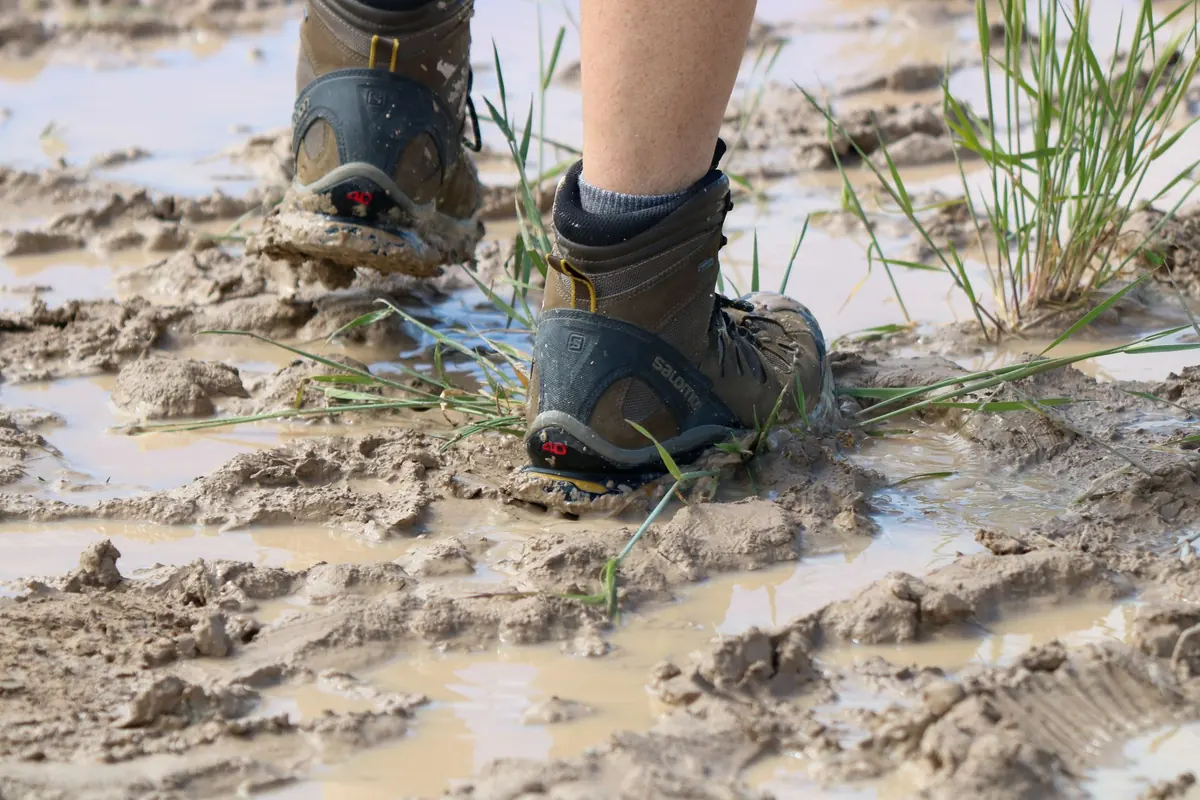
A few habits travel well between formats. Start early in spring, when the ground is still firm and the creeks are lower. Pack spare socks and light gaiters for mud. Take trekking poles for wet descents, which are where most slips happen. Note the snowline on the way up so you know what the descent holds. And tell someone your route and turnaround time, even if it is only a message before you lose signal.
Before You Lock the Car
Check the land manager's or local trail association's page for mud-season closures and current notices, then read the most recent trail reports rather than a description written three years ago. Decide the shape of your route deliberately, set a turnaround time, and pack for wet ground. If ticks are active in your area, do a check at the end of the day; if you find an attached tick and are unsure what to do, a pharmacist or doctor can advise.
Then go. A loop will show you more of the mountain. An out-and-back will let you reach further into it and leave when you choose. Both are good days out in spring, and knowing why you picked one is most of the decision made.
Photo: Hermann / Pixabay